
Our History
New Life Church commenced like many across the nation as a small group of people who, following the Pentecostal revival of the early 20th century, found it difficult to remain within the structures of the mainline denominations.
Pentecostal beginnings
In 1920 two families living at Kells, in Whitehaven (the Smiths and the McAllisters) started home meetings in their houses to which others were invited. Prayer and Bible Study brought an emphasis on the experience of the Baptism in the Holy Spirit and attendant doctrines that were later to become the distinctives of the Pentecostal churches.
In 1924 a number of such groups across the nation joined together to form the Assemblies of God in Great Britain and Ireland, and the Whitehaven group applied to join, and was accepted.
It became impossible in home meetings to accommodate the growing number of adherents, and so premises were rented over a coffee shop in Tangier Street, where a Pastor Pomeroy was the minister for a short period. An eldership was formed and it was from this group of men that the subsequent pastors were drawn until 1977.
Outgrowing the buildings
The Tangier Street room becoming too small, two rooms were rented on the second floor of Catherine Mill (sometimes known as Barracks Mill). Access was by the outside fire escape. Hence it was known as “climbing the golden stairs to glory” due to the exuberance of the members in their worship and preaching.


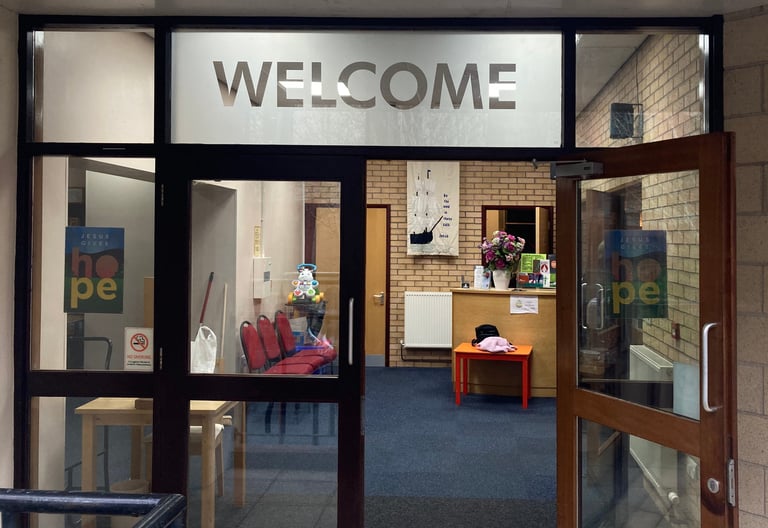
The new Main Hall where we meet
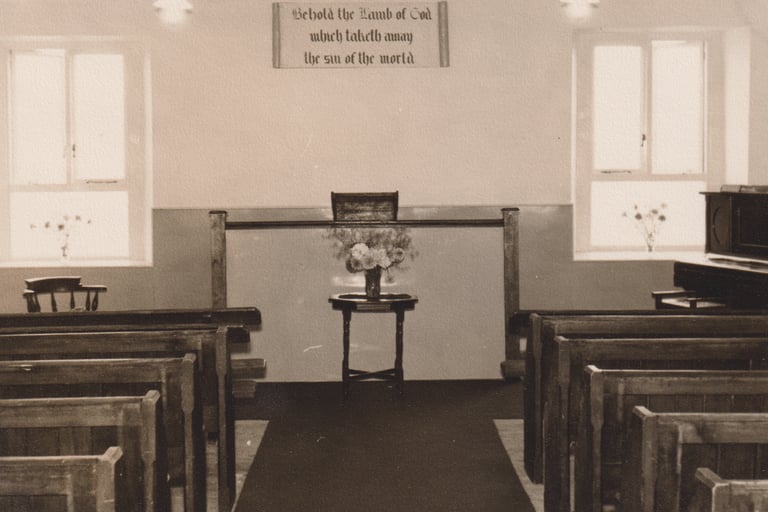
Glad Tidings Hall
Hugh McAllister was appointed as Pastor for a number of years, although he preferred to be the “presiding elder”, followed by another man drawn from the eldership, Henry Postlethwaite. Henry was widely recognised and sought after as a visiting preacher to conventions up and down the land. During his time the former warehouse belonging to Kitchen and Sons at Barracks Arch, Irish Street, came onto the market and was purchased in 1953. It was named Glad Tidings Hall.
Major extensions
John Perkins, who was ministering in the Rossendale Valley, Lancashire, was invited to take on the role. It was during his time that land to the rear and side of the building was purchased from local businessmen. Major extensions were added to provide more ancillary accommodation, and the name was changed to New Life Christian Centre. The Main Hall remained on the first floor presenting a problem for disabled people—and particularly for funerals!
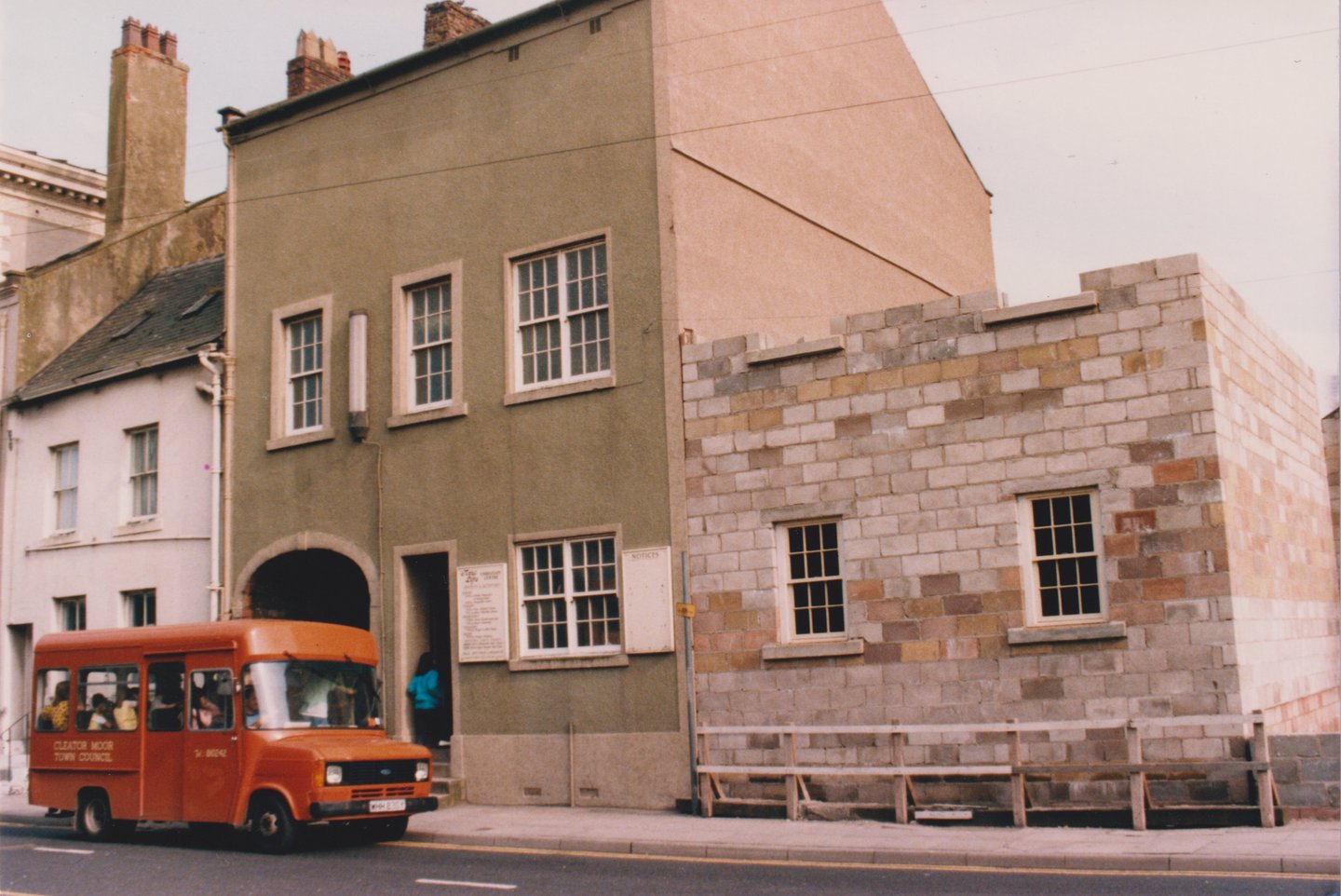
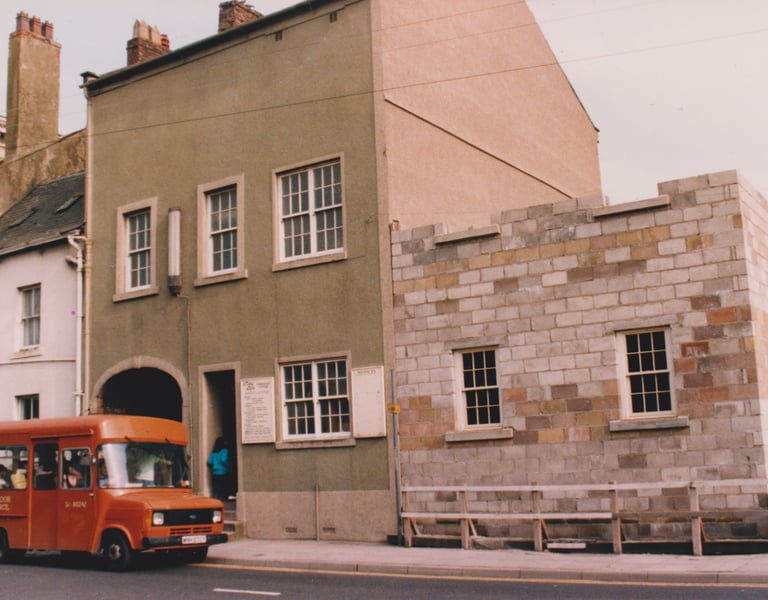
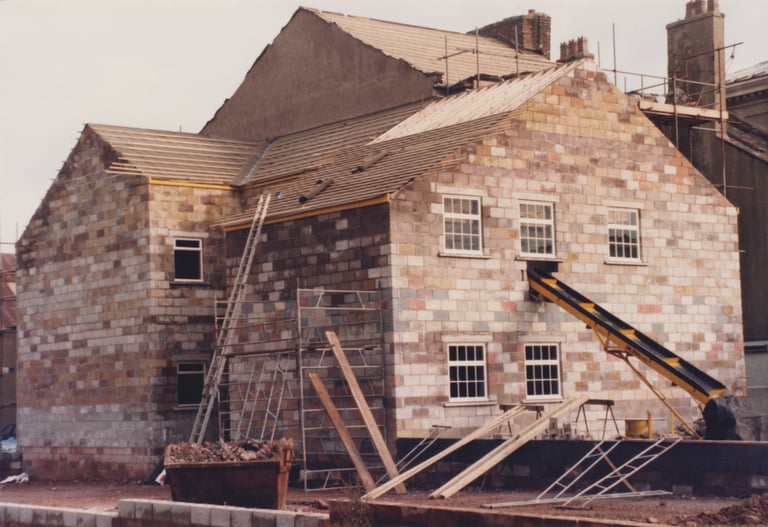
In 1995 John Perkins resigned to take up a pastorate elsewhere. Two rather difficult years followed when the church had two pastors for only short periods. During the latter half of 1997 the church approached Gary Brown, a young man who had grown up in the church, had subsequently obtained a divinity degree, and was serving a church in Greater Manchester. Gary took up the post of Pastor in November 1997 and under his leadership the church has developed a more Reformed theological outlook. In terms of bricks and mortar the church was able, at last, to add a new Main Hall at ground floor level and to incorporate some revamping of the original building.
New Life Church today
In 2017, and after much heart-searching, the decision was made to step away from the church’s historic affiliation with AoG UK. New Life Church was adopted into the Fellowship of Independent Evangelical Churches (FIEC) in the UK, a network which better reflects our emphasis on the gospel of Jesus.
In this last decade the church along with the community in which we live have become more diverse in terms of culture with more than ten different nations represented in the congregation all united by the common bond of faith in the Lord Jesus Christ.
We are here, Lord willing, in Whitehaven and West Cumbria for the long-haul. We value our history and heritage and respect all those who have gone before us. However, for the 21st Century, our eyes are firmly fixed on the future that the living and triune God has planned for us in his providence, and as we look forward to the return of Jesus we believe that our best days are yet to be.
Extensions in the 1980s
A problem generates another church
A problem arose within the church in 1958, and this resulted in the formation of an Elim Church. Effectively, now, there were two Pentecostal Churches in Whitehaven, and these have continued down the subsequent years to serve the community.
Leonard Armstrong took over as Pastor at Glad Tidings Hall in 1958; following his retirement in 1969 John Robert Matthews became the leader. He in turn retired in 1977, and at this point the church sought a pastor from outside its own ranks.
A gospel-centred church for everyone in West Cumbria
© 2025. All rights reserved.
Registered Charity No. 1053316
Give to New Life Church . . .
New Life Church
Whitehaven
